
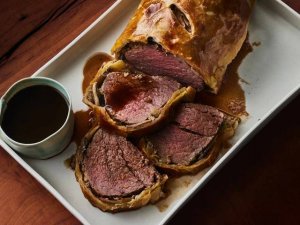
For home cooks aiming to serve a show-stopping main course this holiday season, a classic Beef Wellington offers a blend of elegance and technique that can be mastered with careful attention to detail. The dish, featuring a beef tenderloin encased in puff pastry with a savory mushroom and pâté layer, is often perceived as intimidating, but a step-by-step approach makes it accessible for a festive dinner table.
The recipe begins with a 2.5-pound beef tenderloin, which is first coated with softened butter and roasted in a 425°F (220°C) oven until browned, typically taking 10 to 15 minutes. This initial searing step locks in flavor and creates a base for the subsequent layers. After removing the beef from the oven, the pan juices are reserved for the accompanying sauce, and the meat is allowed to cool completely before proceeding.

While the beef cools, the oven temperature is increased to 450°F (230°C) for the final baking stage. A filling is prepared by sautéing chopped onion and sliced mushrooms in butter for about five minutes, then cooling the mixture. Separately, a blend of liver pâté and softened butter is seasoned with salt and pepper. This pâté mixture is spread over the cooled beef, followed by the sautéed onion and mushroom mixture, creating a flavorful barrier between the meat and the pastry.

Once the beef is fully coated, the assembly begins. The thawed puff pastry is rolled out to a thickness of about a quarter-inch, and the beef is placed in the center. The pastry is then folded over the beef, with all edges sealed carefully to avoid overly thick seams. The wrapped beef is transferred to a 9x13-inch baking dish, where a few slits are cut into the top of the dough to allow steam to escape. A beaten egg yolk is brushed over the surface to promote a golden, glossy finish during baking.

The Wellington is initially baked at 450°F (230°C) for 10 minutes, then the heat is reduced to 425°F (220°C) and baking continues for another 10 to 15 minutes, until the pastry turns a rich golden brown. For those aiming for a medium-rare center, an instant-read thermometer inserted into the meat should register between 122°F and 130°F (50°C to 54°C). After removing the dish from the oven, the Wellington is allowed to rest, which helps the juices redistribute and makes slicing easier.

While the beef rests, the reserved pan juices are combined with beef broth and red wine in a small saucepan. The mixture is brought to a boil over high heat and reduced for about five minutes, then strained to create a smooth, flavorful sauce to accompany the dish.

The final result, served hot, offers a contrast of crisp pastry, tender meat, and a savory filling, with the red wine sauce adding depth. According to the recipe, each serving contains approximately 744 calories, with 57 grams of fat, 30 grams of carbohydrates, and 26 grams of protein, making it a substantial main course for special occasions.

For those planning a holiday menu, this Beef Wellington recipe provides a structured method that can be executed with patience and precision. The key steps—searing the beef, preparing the filling, wrapping in pastry, and monitoring internal temperature—are clearly outlined, allowing even novice cooks to attempt this classic dish with confidence.
Comments
Sign in to leave a comment
No account? Create one
No comments yet.