
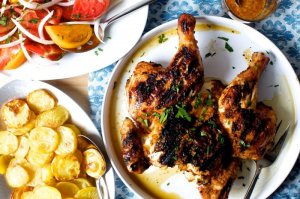
When a family trip to Portugal turned out to be an accidental adventure, it sparked a culinary obsession that followed them home. The destination was chosen almost on a whim, after a frustrating search for a summer rental on Long Island left them looking across the Atlantic for a more affordable and appealing option. The decision to fly to Portugal with a baby and a toddler was a leap of faith, but the payoff came in the form of a cuisine that would become a household favorite: piri piri chicken.
The family found Portuguese restaurants remarkably accommodating to children, with many offering kids' menus and a natural patience that made dining out a pleasure. This allowed them to sample a wide range of local dishes, but it was the piri piri chicken that stood out. The dish, named after the African bird's eye chili, is a celebration of the pepper that is grown across southern Africa and Portugal. The marinade, a punchy blend of chiles, garlic, and herbs, delivers heat that is balanced by bright, sour notes.
Back home, the cook's first attempt to recreate the dish was met with a bewildering array of recipes. From Ghana to Goa, every version seemed to call for a different set of ingredients—basil, ginger, tomatoes, sweet peppers, thyme, oregano, or simply chiles, garlic, and bay leaves. Some recipes even suggested using a bottled piri piri sauce, which felt like a shortcut too far. The challenge was to find a common thread that would capture the kicky-sour-herbed flavor they remembered.
Distilling the Essence of Piri Piri
After sifting through countless variations, the cook settled on a core set of ingredients that appeared most frequently: garlic, shallot, red bell pepper, a small red chili (like piri piri or bird's eye), fresh parsley or cilantro, paprika, dried oregano, lemon zest and juice, red wine vinegar, olive oil, and salt. These were blended into a smooth paste, which was then used to marinate a spatchcocked chicken or bone-in pieces. The result was so well-received that the family skipped a planned pizza outing to enjoy the chicken cold after the kids went to bed.
The recipe is designed for flexibility. The heat level can be adjusted by adding more or fewer chiles, and the chicken can be cooked on a grill or in the oven. For grilling, a spatchcocked chicken takes about 15 minutes per side over medium-high heat, until a thermometer reads 165°F. Chicken pieces need only about 10 minutes per side. For oven roasting, a spatchcocked chicken cooks at 450°F for 35 to 45 minutes, with pieces taking 30 to 35 minutes. The remaining marinade is reserved for serving alongside the cooked chicken.
The cook acknowledges that this version may not be the most authentic piri piri ever made, but it has become their go-to recipe. The ingredients are simple, the preparation is straightforward, and the result is a dish that brings a taste of Portugal to the home kitchen. For those inspired to try it, the recipe offers a starting point that can be adapted to personal taste.
Comments
Sign in to leave a comment
No account? Create one
No comments yet.